
Enhancing FCPA Compliance Across African Jurisdictions: Key Strategies

Get Realistic Training to Survive in a Hostile Environment
A survivor is defined as a person who copes well with difficulties in their life. While the challenges people face differ widely the ability to respond effectively under pressure is universal. Survival is not about strength or luck. It is about preparation and decision-making when conditions change without warning.
Hostile Environment Awareness Training (H.E.A.T.) equips individuals and organisations with realistic skills to manage risk remain composed and act decisively when situations escalate. When the environment turns hostile training is often the difference between vulnerability and survival.
Real-World Examples of Survival Under Pressure
The value of realistic training becomes clear when examining real events where preparation enabled people to cope with sudden danger.
Alison: Responding to an Immediate Threat
Alison stepped outside a Cape Town nightclub to get fresh air before returning inside. A man approached her and began touching her inappropriately. She could have panicked frozen or become overwhelmed. Instead she relied on her training and applied a simple self-defence technique known as the Trident.
That response enabled her to act decisively and escape safely. The effectiveness of the Trident lies in its simplicity. It is a technique that can be learned quickly and applied under stress by anyone.
Scott O’Grady: Survival Behind Enemy Lines
In June 1995 US Air Force pilot Scott O’Grady was flying a peacekeeping mission over Bosnia when his F-16 was struck by a missile. He ejected and landed behind enemy lines. With only his bail-out bag and his training he survived for six days in hostile territory until he was rescued by US Marines.
The contents of his bail-out kit combined with survival training sustained him long enough to be recovered.
These examples occur in very different contexts yet they illustrate the same principle. Training enables effective decision-making when conditions become hostile.
Employer Duty of Care Beyond the Workplace
Every employer has a Duty of Care (DoC) responsibility toward employees and contractors operating on company premises. This responsibility extends beyond the physical workplace when staff travel for business.
When employees are abroad they represent the organisation’s values reputation and operating standards. If their travel exposes them to the risk of loss of life liberty or physical injury employers are obligated to ensure they are properly prepared.
Failure to do so can result in preventable injury detention reputational damage or worse.
What Is Hostile Environment Awareness Training (H.E.A.T.)?
Hostile Environment Awareness Training provides employees with the skills required to operate safely when everyday situations deteriorate into unstable or dangerous conditions.
Available in South Africa these courses are designed for corporate travellers executives journalists NGO personnel and professionals working in unfamiliar or high-risk locations. The focus is on awareness prevention and survival rather than confrontation.
Key Benefits of a Two-Day H.E.A.T. Course
A structured two-day H.E.A.T. course delivers practical operational and strategic value to both employees and organisations.
Corporate Travel Security Policies
Participants gain a clear understanding of their company’s travel security policies and procedures. If no policy exists one should be developed before international travel resumes to ensure consistent risk management.
Pre-Travel Planning and Risk Intelligence
The course emphasises essential pre-departure planning including destination intelligence country risk profiles airport meet-and-greet procedures secure transport routes medical resources emergency contacts evacuation planning and emergency communications.
Thorough planning reduces uncertainty and increases survivability.
Everyday Carry and Self-Reliance
Participants are introduced to the concept of Everyday Carry (EDC). Knowing what equipment to carry and how to use it increases self-reliance and confidence in hostile environments. This capability provides organisations with valuable time to coordinate a controlled and safe evacuation if required.
Informed Personal Decision-Making
Training enables staff to make informed decisions about accommodation transport and leisure activities while travelling. This reduces exposure to physical financial and reputational risk for both the individual and the organisation.
Post-Travel Debriefing and Intelligence Sharing
The course also shows management how to conduct effective post-travel debriefings. These debriefings capture lessons learned competitive intelligence and emerging risks that may affect future travellers.
This process strengthens organisational resilience and improves future travel planning.
Why Realistic Training Matters
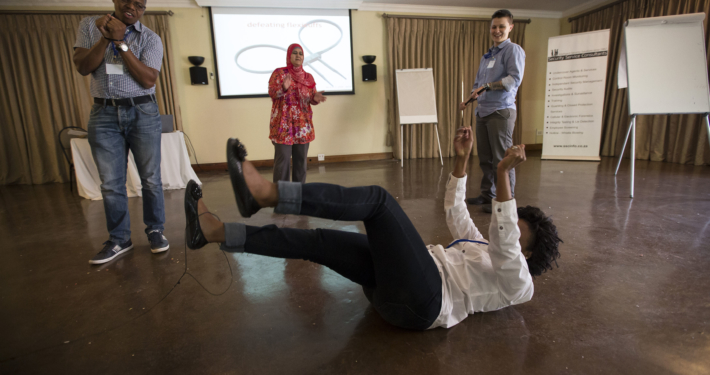
Hostile situations rarely provide advance warning. They often emerge from ordinary circumstances. Realistic training builds awareness confidence and competence allowing individuals to respond intentionally rather than react emotionally.
For organisations H.E.A.T. training is not optional. It is a critical component of duty of care risk mitigation and responsible global operations.
Preparation saves lives. Training turns uncertainty into capability.


